
Keeping up with dental care for one person is enough. Keeping up with it for a child who needs sealants, a parent who grinds their teeth, and a grandparent managing dry mouth or dentures can feel like a part-time job. Coordinating care through a trusted dental office in Fairfield CA can make the process easier for the whole family. Appointments overlap, records sit in different places, and one missed cleaning turns into a bigger problem that costs more time and money.
That is where technology helps. Not in a flashy way, and not by replacing personal care, but by making multigenerational dental care easier to organize, easier to follow, and easier to tailor to each age group. A modern family dentist can use digital tools to catch issues earlier, reduce repeat visits, and help everyone in your household stay on the same page.
Technology reduces the friction that families feel around dental care
Families do not struggle with dental care because they do not care. They struggle because life gets crowded. School schedules, work demands, medications, transportation, insurance questions, and caregiving duties pile up fast. Dental care often gets pushed aside until someone is in pain.
That delay has consequences. A child who misses routine exams may not get early cavity treatment. An adult may ignore jaw pain until it affects sleep. An older adult may deal with gum disease, loose dentures, or mouth changes linked to medication. The National Institute on Aging outlines how aging, chronic conditions, and daily hygiene habits all affect oral health, especially for older adults. Their guide on taking care of your teeth and mouth gives a clear picture of why consistent care matters across later life.
Technology helps remove the small barriers that lead to those larger problems. Online scheduling makes it easier to group family visits. Automated reminders cut down on missed appointments. Digital patient forms save time in the waiting room. Shared records allow the dental team to track patterns over time, which matters when several generations in one family may have similar risks for gum disease, crowding, enamel wear, or oral cancer.
Digital diagnostics improve care for children, adults, and older relatives
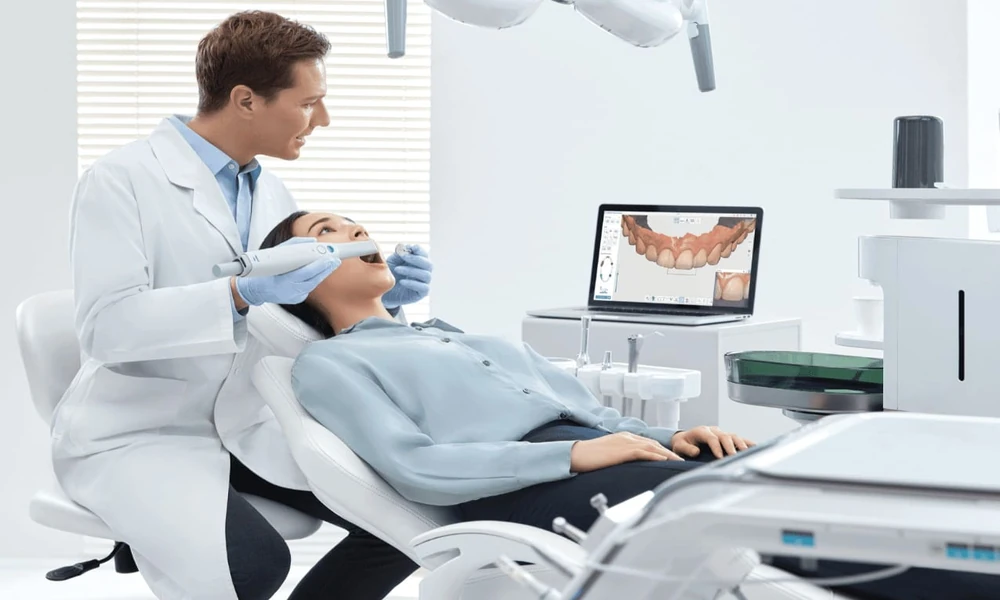
One of the strongest benefits of dental technology is earlier detection. Digital X-rays use less radiation than older systems and produce images quickly. Intraoral cameras let you see what the dentist sees, which makes treatment decisions less confusing. Three-dimensional imaging can help with implants, orthodontics, and complex bite issues. None of this changes the need for skilled care, but it gives your family dentist a clearer view of what is happening now instead of waiting until symptoms get worse.
That matters in real life. A child may have a cavity starting between teeth that is not visible during a basic exam. A busy parent may have gum recession that seems minor until imaging shows more serious damage. An older adult may report soreness under a denture, and digital scans can reveal fit problems before they cause ulcers or infection.
Dental technology for families also supports comfort. Digital impressions can replace messy trays in some cases. Computer-guided treatment planning can make restorations more precise. For patients with anxiety, seeing images and understanding the plan often lowers fear because the process feels less mysterious.
Connected records and communication support multigenerational oral health
When several family members receive care in one practice, continuity matters. A connected system helps the office keep medication lists, allergy alerts, treatment history, and preventive schedules organized. That is useful for every age, but it becomes even more important when health issues overlap. Diabetes, heart disease, pregnancy, dry mouth from medication, and mobility limitations all affect oral care decisions.
The Centers for Disease Control and Prevention has published research on oral health behaviors showing how daily habits shape outcomes over time. Technology supports those habits by making follow-through easier. Text reminders can prompt cleanings. Patient portals can store home care instructions. Follow-up messages can help you remember when a child needs fluoride treatment or when an older parent should come in to evaluate a denture adjustment.
This is the practical side of streamlining family dental care. It is less about gadgets and more about reducing confusion, missed details, and avoidable delays.
Technology works best when it supports care instead of complicating it
Not every tool improves the patient experience. Some offices add new systems without making them easier for families to use. If a portal is hard to navigate, or if scheduling still requires multiple calls, the technology is not solving the real problem. Good systems should save time, explain care clearly, and help different generations receive attention that fits their stage of life.
A child may need preventive monitoring. A teenager may need orthodontic scans. A parent may need a crown that fits well without several return visits. A grandparent may need screening for dry mouth, gum disease, or oral tissue changes. A strong family dentist uses technology to support those needs without turning the visit into a cold, rushed experience.
Practical technology choices can make family dentist visits easier
| Technology or Process | Common Family Challenge | How It Helps |
|---|---|---|
| Online scheduling | Coordinating visits for multiple people | Allows back-to-back bookings and reduces phone time |
| Automated reminders | Missed cleanings and follow ups | Sends prompts by text or email before visits |
| Digital X-rays | Hidden decay or bone loss missed until symptoms appear | Finds issues earlier and speeds diagnosis |
| Intraoral cameras | Patients do not understand why treatment is needed | Shows clear images that make decisions easier |
| Digital impressions | Discomfort with traditional molds | Improves comfort and may increase accuracy |
| Patient portals and digital records | Scattered forms, medication updates, and care instructions | Keeps information in one place for the whole household |
Small steps can improve multigenerational dental care right away
Choose one dental home for the household when possible. A single office with strong digital systems can simplify scheduling, records, and preventive planning. That makes it easier to spot patterns and manage care over time.
Ask how the practice uses technology in daily care. Look for clear answers about digital imaging, reminders, records, treatment planning, and communication. The best tools are the ones that save you time and reduce stress.
Build a shared prevention routine. Put routine visits on the calendar, keep home care supplies stocked, and review special needs for each family member. Children may need brushing support. Adults may need night guards or periodontal care. Older relatives may need help with dry mouth, dentures, or transportation to appointments.
Dental care across generations does not need to feel scattered. With the right systems, the right support, and a family dentist who uses technology with purpose, care becomes easier to manage and easier to maintain. If your household is juggling different dental needs at once, now is a good time to schedule visits and create a simpler plan that works for everyone.
