
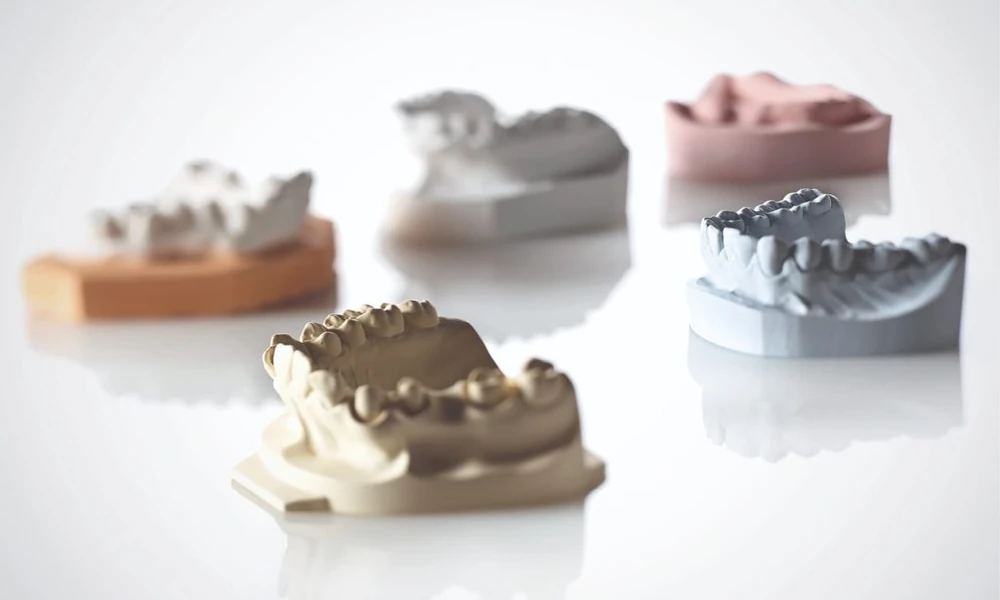
A clear aligner or retainer can only be as accurate as the model it was formed over. If the printed arch shrinks, curls at the base or loses fine detail around the gingival margin, the thermoformed appliance inherits every one of those errors. Key Ortho model resin is a material Keystone Industries sells under its KeyPrint brand (labeled by the maker as KeyOrthoModel) for exactly this job: printing orthodontic models quickly and accurately so they can go straight into a thermoforming machine.
Labs and practices that switch from stone casts to printed models usually do it for speed and storage reasons, then discover that model quality depends heavily on printer setup, file design and post-processing. Each of those links in the chain deserves a look before you commit to a material.
What Makes a Good Orthodontic Model Printing Resin?
An orthodontic model printing resin is judged mainly on dimensional stability. The model needs to match the intraoral scan closely when it comes off the printer and stay that way through washing, curing and the heat and pressure of thermoforming. Low shrinkage is the property that matters most, followed by a surface tdercthat reproduces tooth anatomy without excessive layer lines.
Keystone describes its orthodontic model material as designed for high-speed, accurate printing with low shrinkage, and lists its indicated use as models for thermoforming aligners and other orthodontic devices. Distributors list it in a gray color, which shows surface detail clearly under the light and photographs well for case records. A neutral color also makes it easier to spot trapped bubbles or incomplete features before a model goes to forming. Speed matters in a different way: aligner cases can require a model for every stage of treatment, so a resin that prints quickly without losing accuracy lets a lab produce a full series in fewer printer runs.
Which Printers Can Run Key Ortho Model Resin?
Distributor listings describe the resin as compatible with DLP printers curing at 385 or 405 nm, with verified settings for printer families from Asiga, MiiCraft, EnvisionTEC and Shining 3D. That covers many of the machines found in orthodontic labs, though not all of them. If your printer is not listed, run calibration prints and measure them before using the resin for patient appliances.
Start with the manufacturer’s published exposure and layer settings for your machine. Layer height is a trade-off: thinner layers capture more detail but add print time, while thicker layers speed up production for models that only need to be accurate at the occlusal and buccal surfaces. Many labs settle on a middle setting once they have compared aligner fit at each option.
How Should Printed Models Be Designed for Braces and Aligner Cases?
File design has as much influence on accuracy as the resin itself. Printing a solid arch uses more material and can increase the risk of distortion, while a hollow model with drain holes saves resin but needs enough wall thickness to resist thermoforming pressure. Add a flat, even base so the model sits squarely on the forming plate.
Models printed in Key Ortho model resin for braces cases serve slightly different purposes than aligner staging models. Study models, models for fabricating retainers after debonding, and setups used to check bracket positions all benefit from crisp anatomy. For appliances that cover brackets, block out undercuts digitally before printing so the formed plastic releases without tearing or distorting.
Orientation affects the result too. Printing models flat on the build plate is fast, but angling them slightly can reduce suction forces during peeling and improve surface quality on vertical walls. Test both on your printer before settling on a default. Leave enough room between models on the build plate for resin to drain freely, since crowded plates tend to trap uncured material in the hollow interiors.
How Do You Post-Process Printed Orthodontic Models?
Post-processing follows the usual pattern for dental photopolymers: wash off uncured resin with isopropyl alcohol, dry the model fully, and post-cure it under UV light. Follow Keystone’s instructions for wash time and cure settings, since overly long alcohol baths can soften surfaces and undercuring leaves models that deform under forming heat.
Some reminders that save remakes:
- Let models dry completely before curing so alcohol does not cloud the surface
- Remove supports carefully to avoid gouging the base
- Inspect gingival margins and incisal edges for missing detail
- Store finished models away from direct sunlight if they will be reused
Can One Lab Use Several Keystone Resins Side by Side?
Many orthodontic labs use multiple materials from the same manufacturer, such as model resin for aligner models and flexible resin for bonding trays. Labs that buy Key Ortho model resin online may also purchase IBT resin for appliance fabrication. When using both materials, keep separate resin vats and wash containers, and label them clearly to prevent cross-contamination, as mixing flexible tray resin with rigid model resin can compromise the quality of both.
Dedicated equipment also makes troubleshooting easier. If a batch of models starts warping, you can trace the cause to a single vat, a single resin lot and a single set of settings instead of guessing. Logging which resin lot went into each case also helps if a clinician reports a fit problem weeks later, because you can check whether other models from the same lot behaved the same way.
What Is the Best Way to Check Printed Model Accuracy Before Thermoforming?
A simple quality routine catches most problems early. Print a reference model whenever you open a new resin lot or change settings, measure a few fixed points such as intermolar width against the digital file, and form a test aligner to check fit. Record the results so drift becomes visible over time, and adjust exposure or orientation only when the measurements show a consistent change.
