
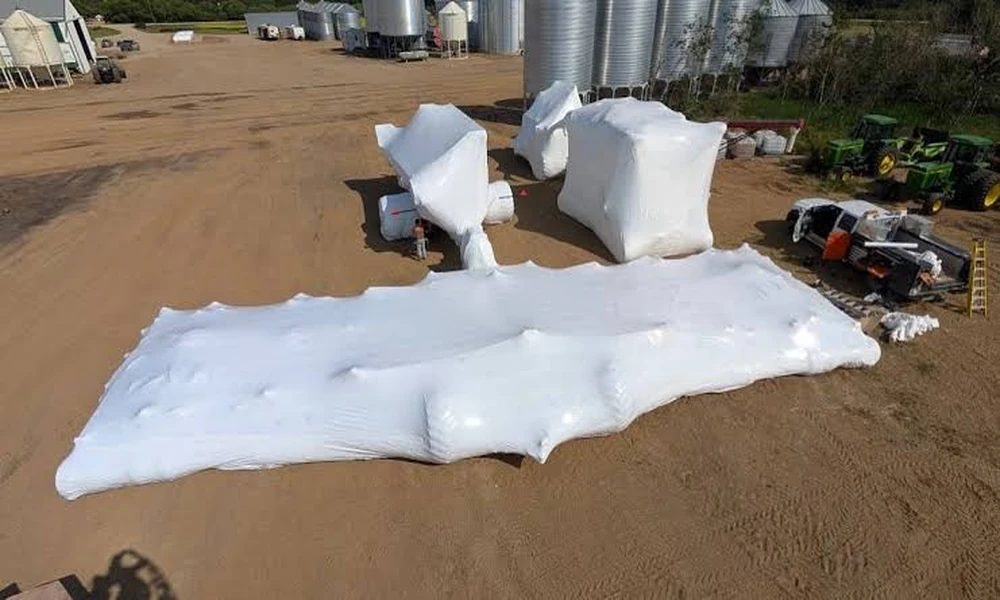
Twenty thousand dollars. That is what one Gulf Coast fabrication shop spent replacing hydraulic cylinders on a skid that sat uncovered in its yard for eight months.
The worst part? A proper wrap would have run about six hundred. I see this pattern constantly: teams treat outside storage like a parking spot instead of a preservation job, then pay for it twice. If you run a yard, a farm, a contractor fleet, or a warehouse dock, understanding why shrink wrap is beneficial for industrial equipment is one of the highest-return things you can learn this quarter, because it changes how you buy steel, forklifts, and anything else that sits.
Below I’ll walk through what the material actually does, a simple five-zone framework I use to decide what to wrap and how tight, and the application rules that separate a ten-year cover from a sagging tarp that turns into a pond.
What Shrink Wrap Actually Does That a Tarp Doesn’t
A tarp covers. Shrink wrap seals. That distinction sounds small and it is the entire ballgame.
Polyethylene shrink film is applied loose, then tensioned with heat so it physically tightens around the contours of the equipment. The result is a continuous skin with no grommets, no flapping corners, and no gaps for wind-driven rain to enter. Water pools on a loose tarp and finds a seam. Water beads and runs off a properly tensioned wrap.
Three things follow from that seal:
- Moisture and humidity stay outside the film, so condensation on machined surfaces is far less likely.
- Wind can’t get underneath and act like a sail, which is what shreds cheap covers in coastal or open-field storage.
- Dust, bird droppings, salt spray, and industrial fallout never make contact with paint or bare metal.
The dirt angle deserves more attention than it gets. Airborne particulates settle into crevices and hold moisture against steel. A sealed wrap removes that whole failure mode at once. If you’ve ever scraped a rust bloom off a stored bearing housing, you know the cost of a millimeter of water sitting in the wrong place.
The Five-Zone Wrap Framework
Here’s the method I use, and it’s what I’d hand any new yard lead on day one. Split everything on your site into five zones and wrap by zone, not by gut feeling.
Zone 1: Hard Metal and Bare Steel
Pipes, plate stock, structural steel, and anything unpainted. These get the tightest, most complete coverage you can apply. This is where a single rainy season does the most damage, and where a few hundred dollars of film prevents the biggest loss. Wrap first, sell later.
Zone 2: Finished Equipment
Pumps, skids, compressors, and rental units with paint or coatings. Fully sealed, but pay attention to sharp edges and breather points, which you’ll want to pad before tensioning.
Zone 3: Palletized Parts and Inventory
Shrink wrapping pallet loads keeps boxes bound and stackable without a stretch-wrapping marathon every morning. This is the zone where you’ll see the fastest payback, because it saves daily labor.
Zone 4: Landscaping and Ground-Level Assets
Gravel, mulch, soil, and similar bulk materials. A ground-cover wrap holds a pile shape through rain and prevents the wash-out that turns a neat pile into a driveway problem.
Zone 5: Short-Term Overflow
Temporary storage outdoors, usually weeks rather than months. Wrap it anyway. The wrap costs less than the labor of moving gear back inside when a storm front shows up.
Notice the pattern: the framework doesn’t ask whether to wrap, only how tight and how much edge padding. I’d pick a fully sealed wrap for zones one and two every time, even where a cheaper tarp would look adequate on paper, because the money isn’t in the cover. It’s in the equipment that a cover protects.
Heat and UV: The Part Most Teams Skip
Sun damage is slow, silent, and easy to ignore until it isn’t. Elastomers on hoses, rubber seals, and plastic housings all degrade under accumulated ultraviolet exposure, which is one of the most studied environmental degradation mechanisms in materials engineering. The National Aeronautics and Space Administration has published extensively on how UV exposure degrades polymeric materials over time, and the same physical process works on your outdoor equipment whether or not anyone is running a lab test.
Opacified, UV-resistant shrink film blocks that exposure at the surface you care about. I look at it like sunscreen for a skid. You don’t feel the difference in month one, and you notice it enormously in year three.
On the flip side, wrap can trap heat, so ventilation by design matters. Leave an intentional breathable gap near the base of very temperature-sensitive items, or use vented film. Do that and you get UV protection without creating a sweat box.
How to Apply It So It Lasts
Application quality separates a wrap that holds for two seasons from one that fails in two months. Here’s the checklist I’d follow on every job.
- Clean and dry first. Dirt and moisture under the film become a permanent grinding paste or a rust pocket. Wipe down bare metal, let it dry fully.
- Pad the edges. Sharp corners, bolt threads, and exposed rebar will pierce film. Tape foam or cloth over them.
- Tension in bands. Heat evenly and work from one end to the other so the film tightens uniformly. Uneven heat creates slack pockets that flap.
- Seal the base. Anchor the bottom edge to a pallet or skid so wind can’t reach underneath. This is the single most common failure I see.
- Label the contents. A wrapped skid becomes a mystery. Write what’s inside and the wrap date on the outside.
Each of these is a ten-minute habit. Skip any one and you’ll wish you hadn’t, usually at the worst possible time.
The Money Math
Industrial sealing and packaging practices are widely covered by professional engineering organizations. The Institute of Electrical and Electronics Engineers publishes engineering standards that touch on materials and environmental protection across a wide range of fields, which is a useful reminder that these aren’t improvised techniques, they’re established practice.
The arithmetic is the same everywhere. Compare the price of film and a heat tool against replacing or restoring a single pump, generator, or hydraulic unit that spent a wet winter uncovered. Do the math on labor too, because a permanent wrap means your crew doesn’t re-tarp the yard every time weather turns, which frees hours every month.
My rule of thumb: if an asset is worth more than a few hundred dollars and will sit outside for more than a couple of weeks, wrap it. No exceptions.
Where It Fits in Your Operation
Warehouse and transport teams parallel this approach with unitized loads all the time. Air cargo operators, for instance, rely on standardized load containment practices, and the International Air Transport Association sets widely referenced guidelines on cargo handling and securing that assume stable, contained units. Industrial shrink wrap gives you the same stability on a plant site that air cargo handling demands on a pad.
The trap I’d avoid is thinking of wrap as a last-minute purchase. Buy it as part of how you store inventory, budget for it the same way you’d budget for a moisture barrier, and train your team on the application steps. Teams that do it as routine seem to lose equipment to weather far less. I’d take that every time.
Take an hour to walk your yard. Ask yourself which five items would hurt most to replace. Wrap those first, apply the five-zone framework, and let the sun do its worst to the film instead of your equipment. You’ll know you got it right when a storm rolls through and your only concern is the wrap.
