
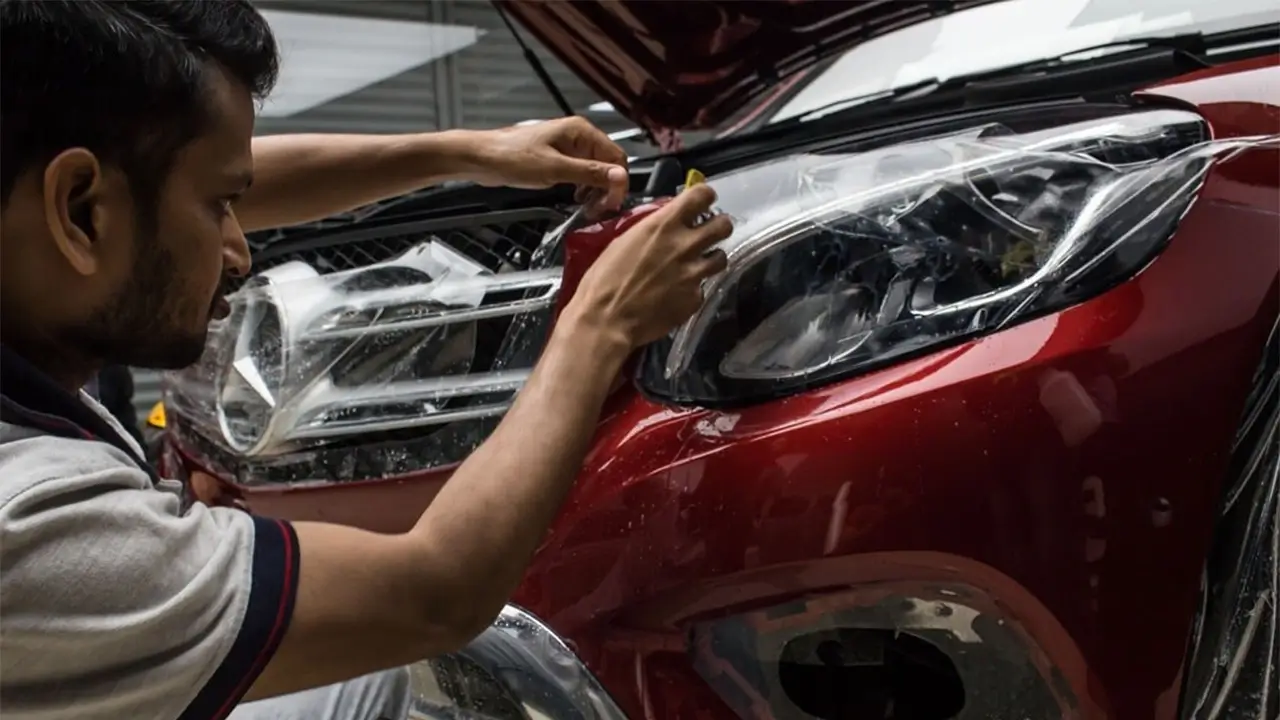
To preserve a vehicle’s appearance and its long-term value, it is crucial to ensure that its exterior is well-protected and adequately maintained. This maintenance, however, is often tampered with due to everyday exposure to dust, debris, sunlight, and environmental pollutants. These externalities can gradually damage a car’s paint. To address these concerns, paint protection film (PPF) has emerged as an effective solution that protects the exterior aesthetic of the vehicle by creating a durable and nearly invisible barrier over the vehicle’s surface. To understand this protective option in greater detail, individuals can go here to explore how it works and protects the vehicle’s exterior.
What is Paint Protection Film?
Paint protection film is a transparent, thin, flexible layer made from polyurethane that is applied directly over a vehicle’s painted surfaces to safeguard it against external damage. While PPF was initially intended for more high-impact vehicles and technologies like military vehicles, it has slowly tapped into the more mainstream consumer market and is often a go-to protective solution for vehicles in general.
PPF, owing to its transparency and flexibility, blends with the vehicle’s original paint seamlessly. This seamless blending ensures that the overall aesthetic appeal of the vehicle, along with its finishing, remains unchanged and unblemished. It is preferably installed on the higher-impact areas of the vehicles, such as the front bumper, hood, fenders, and side mirrors, where damage is most likely to occur.
How Does Paint Protection Film Function?
PPF has a three-layered composition, which is what makes it effective. The topmost coat, or the top coat, is a clear coat that primarily functions as a stain resistor and avoids discolouration. The second layer is the middle polyurethane layer, which provides flexibility and strength. The layer closest to the vehicle’s exterior is the adhesive layer, which ensures the cohesive application of the film securely to the vehicle.
What happens owing to this three-layered structure is that whenever there is any external element that comes in contact with the film, the impact is absorbed by the protective layer. What this does is that it protects the layer of paint underneath it, thus significantly reducing the likelihood of any permanent damage. Because of the film’s elasticity, it spreads well over the vehicle’s curved surfaces as well, which provides comprehensive coverage.
Nonetheless, this comprehensive coverage and durable protection can only be adequately produced if the installation of the PPF is proper. Proper installation also ensures longevity, while acting as a virtually invisible barrier with zero interference with the vehicle’s original design. Over time, the film continues to provide consistent protection with minimal maintenance requirements.
Advantages of Using Paint Protection Film
PPF, apart from ensuring the finish of the vehicle, becomes more beneficial in terms of increasing the vehicle’s resistance to scratches and chips. The smaller scratches, usually caused by road debris, gravel, and other particles, lead to blemishing the finish of the vehicle. These visible imperfections are more blatantly visible on unprotected surfaces, but with PPF, the vehicle has an added shield that absorbs such impacts.
The benefits of PPF exceed primary shock absorption as well, considering that it also acts as a guard against environmental damage, which may occur due to contaminants such as bird droppings and tree sap, which eventually lead to stains on the exterior or, in extreme cases, the corrosion of the same. PPF also prevents fading owing to extended exposure to the natural elements, especially ultraviolet rays, thus overall minimizing impact by acting as a protective layer.
However, the most crucial feature, and a rather advanced one at that, is the self-healing capability of the PPF. Heat exposure aids in removing minor scratches and swirl marks, which allows the exterior surface to retain an unblemished, polished, and smooth look without any additional treatments.
Maintenance and Durability
What makes PPF a suitable avenue for exterior protection is its relatively low maintenance. Unlike other finishes, PPF does not require regular waxing; cleaning with soap and water is sufficient for maintenance of good condition. Owing to this, PPF becomes a more convenient option for vehicle owners.
While the durability of PPF does depend on factors such as climate, driving conditions, and above all, quality, if maintained well, the film does last for several years. This longevity is especially prevalent with high-quality PPFs. One of the most ideal features is also the easy removal of PPF; its removal or replacement can be undertaken without damaging the original paint layer. This contributes to it being an ideal, flexible, long-term solution.
Conclusion
Paint protection film is a rather practical and efficient avenue for safeguarding a vehicle’s exterior from not just everyday wear and tear but also from prolonged environmental damage. PPF is an ideal combination of durability, longevity, and low maintenance with advanced features such as self-healing, making it a preferred protective choice for vehicle owners. Individuals seeking to enhance their vehicle’s finish while increasing protection can choose to go here to gain deeper insights into how PPF works.
